While looking through the archives, I came across this article written by Dianne McKillican for the Rayjon newsletter in June 2001. I was struck by how relevant it still feels 25 years later. We are still surrounded by fundraising campaigns that show children in their most vulnerable moments, in an effort to spark empathy and donations. As Dianne pointed out then, this kind of imagery should already be a thing of the past. More than that, it strips people of their dignity and places “us” above “them,” which leaves no room for real partnership or respectful, two-way dialogue. The sector has made progress, but it’s worth continuing to reflect on these models until they are gone for good.
Dianne’s article explores this in much more depth, but I want to add a few thoughts from today.
Here in Canada, donors like knowing that their support makes a direct difference, and sponsoring an individual is often the easiest way for a donor to feel that connection. But as Dianne notes, feeling like you are making an impact and actually making one are not the same thing. Supporting a community or larger program almost always creates a stronger and longer-lasting impact than supporting one person, especially when programs reach across generations. You could sponsor one child to go to school, or you could support a program that pairs education with support for mothers, who then build their own businesses and send all of their children to school.
It comes down to a quick fix versus a long-term investment. Funding makes all programming possible, but good programming places the community in charge of its own change, collectively. Sponsoring one child is a single intervention.
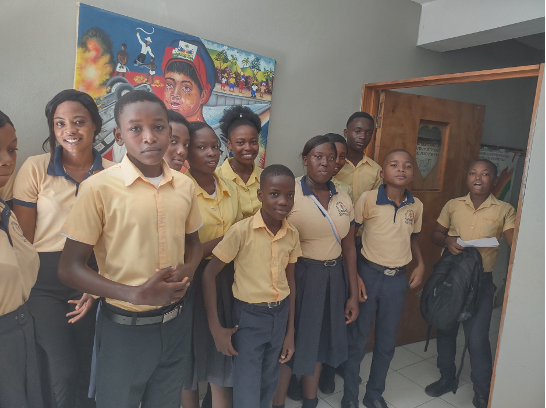
That doesn’t mean individual support is never part of the picture. We recently sent out an appeal for post-secondary scholarship support ourselves. The difference is that when one student benefits, it happens through a larger, interconnected program and as part of a clear strategy, rather than feeding the same saviour narrative. That is also why we don’t take this approach with our secondary scholarship students (as pictured above at CNEWC in Cap-Haïtien) or the children in our nutrition programs. We will always put the dignity, agency and humanity of families first. I’m sharing Dianne’s article to keep challenging our own thinking, and the thinking of those who support this work. Thank you, Dianne!
Child Sponsorship.. Should We or Shouldn’t We?
by Dianne McKillican, June 2001
Sponsorship of Third World children is part of the fabric of our society. We see the ads in newspapers, magazines and televised infomercials. Children are usually pictured alone, sometimes in groups, or in classic “Madonna and Child” compositions. And these wistful, sad-eyed children all elicit a gut response; we feel “guilted” into giving.
The topic of Child Sponsorship comes up regularly. Friends, co-workers and sometimes perfect strangers often ask those of us involved with Rayjon if it is “a good thing to do” – as if we had the inside track on these programs and could dispense reassurance as well as the definite yes or no answer. Well, we don’t and can’t, but what this article will do is to give information from various sources on this topic and allow you to make a more informed decision on this matter.
The advertising, which usually appears shows a universally squalid Third World full of passive, needy people – especially children. The television appeals are particularly disturbing; we are taken on a whirlwind tour of the world’s children – just waiting for their prospective donors to pick up the phone. With very few honorable exceptions, the causes of the suffering are poorly explained, although we are assured the solutions are easy. Solutions are also cheap; it may be 40 cents a day or $29 dollars a month. Very little is said about what Third World governments or local organizations are doing in their own countries to improve conditions. The language is invariably of “them” and “us” – the apparently helpless “them” being helped by “us”. Several studies in the UK show that “helpless child” imagery has reinforced patronizing attitudes among young people towards the Third World – especially in the wake of “Band-Aid” and other African famine appeals. While such appeals evoke compassion for the Third World children, they also strengthen young people’s perception of Africa as a helpless continent – in which only healthy, happy people are “aided” people. And they do nothing to help us understand the connections between conditions in Africa and what happens in the West.
At last year’s “Images of Africa” conference, representatives from African non-governmental organizations pressed for dialogue about fund-raising imagery. It was said that too many voluntary agencies strip Africans of their real dignity, that the stereotypes of poverty should be abandoned and substitute the voices of the poor people themselves. One leading conference participant said – “As regards “Band-Aid”, people were certainly saved and we are grateful. But we are living with that negative image. It has reinforced racism, which is a damaging attitude if you want to engage in dialogue about human development with the West.” (1) We obviously can stumble, even with all good intentions.
But the starving child image is rarely absent for long. One leading UK magazine recently said that they tried to make their advertisements more positive – “but no one dipped their hands into their pockets; the only thing that does it is guilt: you have to shock people.” One-to-one sponsorship schemes are afflicted by problems. Enormous sums of money are spent seeking information on the sponsored children for their donors, chasing up unanswered letters and calling children to have fresh photos taken. The head of the Bolivian Save the Children Fund, Enrique Butron, says all the extra administration and work makes the price of a requested photo around $19; this is equivalent to a month’s sponsorship. But child sponsorship has more worrying problems than inefficiency and expense. There are ethical questions about the “selling” of children to potential donors, and the rifts that develop when individual children are singled out for sponsorship. Siblings and other families often become jealous, and the parents are humiliated because outsiders are providing things that they cannot – or frustrated that only one child is receiving help. Some poor families prefer to go without rather than shame themselves by advertising their need, and the programs miss the poorest ones. Sponsored children become the objects of ridicule and jealousy. There is little thought as to what sponsored children will do when they complete their education. Experience shows that as educated adults they will no longer want to do unskilled work. And there is little opportunity for them to have a white-collar job in their village, so they leave, taking their skills away from the village that needs them.
Another issue is how the child sponsorship money is distributed. Should the agency give the money to the child’s parents? What if they don’t use this money responsibly? Or should the agency buy the things they deem necessary for the child? The father of one sponsored child feels that the sponsoring agency spends too much of its money on uniforms and books – he would rather the money were put into his son’s bank account. And he resents not having access to this account: “I will need the money to get him a job. Do you think we can get to any job these days without paying a bribe?” (2)
An increasing number of donors want religious conversion as well as material aid for their Third World proteges. Conditional giving violates the rights of the children to choose their own religion – it is a form of blackmail on those desperate for assistance. The interests of the aid agency and the “rights” of sponsors to keep tabs on their children take priority over the needs of the children they claim to serve.
But some organizations are taking a hard look at their approach to child sponsorship. The emphasis has been shifted from individual to community-centered sponsorship, and the results seem promising. But individual children carry more donor appeal than a community; 3000 of Save the Children’s 8500 foster parents withdrew their financial support with the change to community-centered support. Other agencies face the same problems but are still trying to help local grassroots agencies unite in community development. One Director says: “The good thing about community sponsorship is that people who support us can get a better handle on what they’re doing. If they start to identify with an issue, the next time that arms trade or debt comes up on TV, they’ll start to make connections.” (3)
Dean Riley, whom many of us have met in the Dominican Republic, works with the Scarborough Foreign Missions outside Santo Domingo. The Awareness Trip group who met Dean two months ago was powerfully affected by what he had to say about the many injustices of living in the Third World. The following is an excerpt from an e-mail Dean sent to me. “Too often people are moved to respond to the things they see on TV… pictures of starving children with distended bellies. They give… and their reward is a sense of doing something to help the problem. The irony is that the money given does not solve the problem… it is a Band-Aid… it does nothing to address the larger issues of why the child is poor and starving. It creates dependencies on North American charity for survival. It makes us feel good. We feel we have done our part. Multi-national corporations like organizations like these because they do not rock the boat… they do not ask too many questions. The late Archbishop Dom Helder said: “When I fed the poor, they called me a saint… when I asked why the poor were hungry, they called me a Communist!” Pumping our leftovers into the Third World will not solve the problems. What is required is that we in the North must begin to evaluate our lifestyles, question and demand change of the multinational corporations, which create, sustain and worsen world poverty. In order to bring justice, the real work must begin in the North….”
Sponsorship – development – community – aid – they all tie in together and we must decide for ourselves what our role is to be in changing, helping or sustaining any or all of these. It’s difficult to understand everything we read and hear; so much information is contradictory or biased or incomplete. But we need to know more of the whole story behind the feel-good response of child sponsorship. If you are already sponsoring a child or are thinking of doing so, consider these questions. Does the agency involved use sensitive pictures and written material that respects the dignity of the needy child or family? Do they stress community development instead of promising a better life for just one child? Do they involve the indigenous people in the decision-making process of what is “best” for that particular community? Does the agency raise awareness about the global issues that are the source of Third World misery, and encourage action in response? Do the relief efforts in the wake of a natural disaster encourage a transition to development? Does the agency partner with local governments so that the aided people don’t become dependent on outside help, and help them develop the skills and resources needed for self-reliance? Through either sponsorship programs or direct appeals for aid, does the agency empower the people to help bring about change themselves? Are you offered the opportunity to sponsor a latrine? A school? A community group pressing for change? If you are satisfied with the answers you receive, then respond in whatever manner that is appropriate for you. We are all here to transform lives, at home – and abroad.
(1) – Sithembiro Nyone, Zimbabwe – @ “Images of Africa” conference 1988.
(2) – UK Magazine “New Statements & Society” – article supporting the UN Association appeal for Sudan.
(3) – David Morley – Ex Director of “Pueblito Canada”